Free Tool · Companion to the Book

RRSP Meltdown Calculator

See what an optimized withdrawal sequence across your RRSP, LIRA, TFSA, and non-registered accounts could save you in lifetime tax — and how much OAS clawback you can avoid.

The calculator shows the magnitude. The book shows you how to execute it.

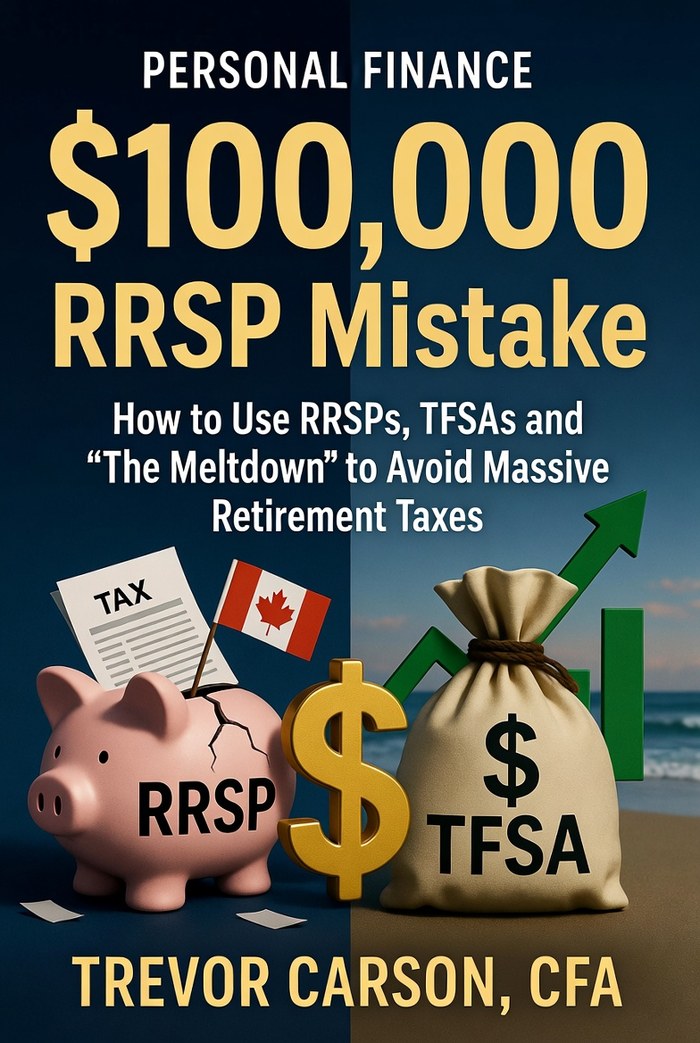
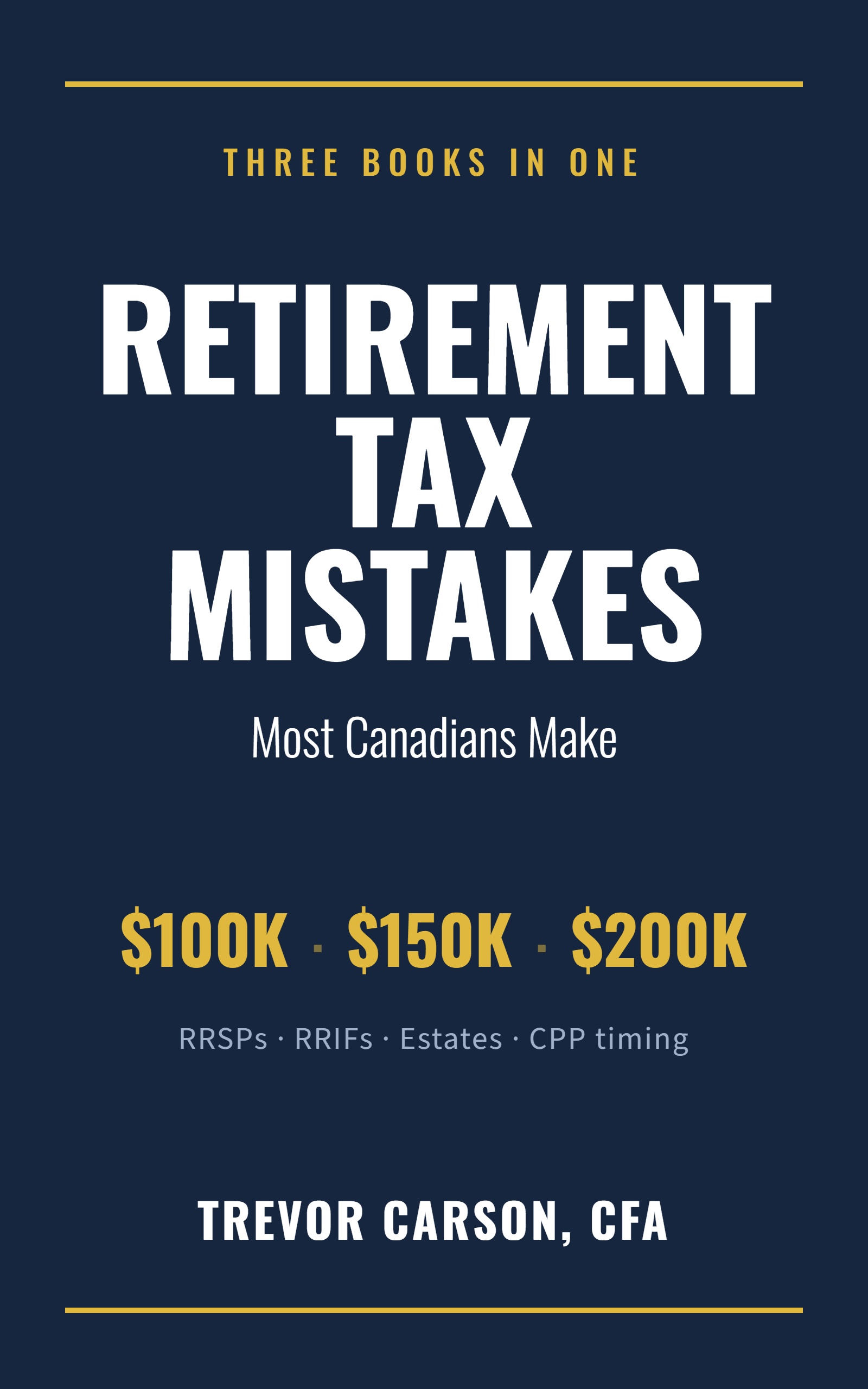
Withdrawal sequencing is one of seven decisions covered in The $100,000 RRSP & RRIF Mistake Most Canadians Make — including LIRA unlocking, spousal income splitting, asset location, and CPP/OAS deferral.

Get the Book on Amazon →

Assumptions & limitations

The calculator is built to show the order of magnitude of withdrawal sequencing decisions. Here's exactly what's modeled and what isn't, so you can judge how closely the output maps to your situation.

Show what's modeled and what's simplified

What's modeled

  • 2026 marginal tax brackets, indexed to inflationCombined federal and provincial rates for the province you select. Bracket thresholds are indexed each year by the inflation rate you set, matching the actual CRA practice of indexing brackets annually. Without this, the model would artificially overstate tax via bracket creep over a 30+ year horizon.
  • OAS clawbackStarts at approximately $93,500 net income (2026), 15% recovery rate, threshold indexed to inflation each year.
  • 10% OAS boost at age 75Permanent increase introduced in 2022, applied on top of any deferral bonus.
  • CPP & OAS deferral7.2%/yr in both directions (simplified — actual CPP is 8.4%/yr post-65, so the model is conservative on CPP deferral upside).
  • RRIF minimum withdrawalsStandard CRA schedule from age 71, applied to combined RRSP + LIRA balance.
  • LIF maximum withdrawalsThe LIRA portion of registered draws is capped each year at the regulatory LIF max %. Excess demand is shifted to RRSP. The model uses the 2026 ON/AB/BC/NB/SK/NL table — the most common provincial grouping — so federal/PBSA, MB, NS, and QC LIFs (which are stricter) will have somewhat less flexibility than shown.
  • Meltdown intensityThe optimizer tests two pre-71 withdrawal ceilings — one that stays just under the OAS clawback threshold, and one that lifts the cap up to 20% above the threshold. The aggressive version trades some current clawback for a smaller RRIF balance at 71, suppressing the post-conversion clawback cliff. The optimizer picks whichever produces more after-tax wealth.
  • Capital gains50% inclusion rate on non-registered withdrawals, with ACB tracked and consumed proportionally.
  • Inflation indexingSpending, OAS, the clawback threshold, and tax brackets all grow at the rate you specify.
  • DB pension incomeOptional input. Treated as fully taxable income starting at the age you specify, indexed to inflation each year. Reduces the meltdown window because lower tax brackets are already partially filled.
  • Terminal tax on deathThe after-tax estate at end-of-plan accounts for deemed disposition: RRSP and LIRA balances are taxed as final-year income (using brackets inflated to the final year), non-registered balances trigger a capital gain on (FMV − ACB) at 50% inclusion, and TFSA passes tax-free. Spousal rollover is not modeled (single-person model).

What's simplified or excluded

  • Single-person modelNo spousal RRSPs or survivor scenarios. Pension income splitting (DB pension at any age; RRIF income from 65+) can materially reduce a couple's tax bill and is not modeled here.
  • Dividend tax creditNo gross-up or credit modeling — eligible and ineligible dividends treated as ordinary income.
  • $250k capital gains thresholdThe proposed two-thirds inclusion rate above $250k is not modeled.
  • Personal creditsAge amount, pension income amount, and other non-refundable credits are not applied.
  • Provincial surtaxes & creditsHealth premiums, surtaxes (Ontario, PEI), and provincial-specific credits are not included.
  • LIF jurisdictionLIFs follow the pension plan's regulator, not the holder's province of residence. The model uses a single common table; a federally-regulated or QC/MB/NS LIF will be somewhat more restrictive than shown.
  • GIS & income-tested benefitsNot modeled; relevant mainly for lower-income retirees.
  • Constant returns & inflationNo sequence-of-returns risk, no variable inflation. Real-world outcomes will deviate.
  • Tax law changesRates and thresholds are held constant in real terms; future legislation may change everything above.

Educational tool, not financial advice

This calculator is provided for general informational and educational purposes only. It does not constitute financial, tax, legal, or investment advice, and no advisory or fiduciary relationship is created by using it. The output is intended to illustrate the order-of-magnitude impact of withdrawal sequencing decisions — not to produce a precise plan for any individual. Before acting on anything you see here, consult a qualified fee-only financial planner or tax professional who has reviewed your full personal circumstances, including risk tolerance, health, family situation, estate goals, and the specifics of every account you hold.

The author and publisher make no representations or warranties, express or implied, regarding the accuracy, completeness, or fitness for any particular purpose of the information produced by this calculator. To the fullest extent permitted by applicable law, the author and publisher disclaim all liability for any loss, damage, or negative consequence of any kind arising directly or indirectly from the use of or reliance on the calculator's output. Tax rules, benefit programs, and contribution limits referenced here may change after publication.