The Canadian Retirement Tax Series 1 · Drawdown sequencing· 2 · CPP & OAS timing· 3 · Tax at death
Two decisions. One page.

The CPP & OAS Decision Tree

Six questions, worked in order. Each one can end the analysis — which is why the order matters. Answer them below and you'll get a start age for each benefit, the reasoning behind it, and a worksheet to write it down.

Prefer to see the whole tree at once?
1Will your retirement income be low enough for the Guaranteed Income Supplement?
YesTake OAS at 65. Be cautious about deferring CPP. GIS cannot be received without OAS, and it is reduced by other income including CPP. Most of the standard advice inverts here.
NoContinue.
2Can you fund the deferral years from other assets without hardship?
NoTake the benefits when you need them. A legitimate answer, not a failure of planning. There is no virtue in eating less at sixty-two to have more at eighty-five.
YesContinue.
3Do you have a spouse or common-law partner?
YesSettle the household questions first. The lifespan that matters is the longer of two — which changes the input to the next question, not just the answer. And a survivor's pension is calculated on the deceased's age-65 amount, so deferring does not increase what a spouse receives.
NoContinue.
4Is your probability of reaching 90 low, for specific and identifiable reasons?
YesTake CPP at or near 60. Take OAS at 65. A genuine reason to take benefits early is a genuine reason. Nothing here obliges you to bet against your own circumstances.
No / unsureContinue. Unsure resolves toward deferral — that is what insurance is for.
5What happens to your income after 70?
FallsDefer CPP to 70. Defer OAS to 70. High earnings, severance or a business sale in your sixties, then quieter.
RisesDefer CPP to 70. Take OAS at 65. Rising RRIF minimums. The most common pattern — and the one that splits the two decisions apart.
FlatDefer CPP to 70. Defer OAS to 70. Comfortably below the recovery threshold throughout. Nothing complicates it.
6A large indexed defined-benefit pension?
YesConsider 67–68 for CPP rather than 70, and treat OAS clawback management as your main issue.
NoYour answer stands.
Why the order matters
You are insuring against living a long time, not betting on dying early. Only one of those is a scenario you will be around to experience.
Every branch above has a chapter behind it.

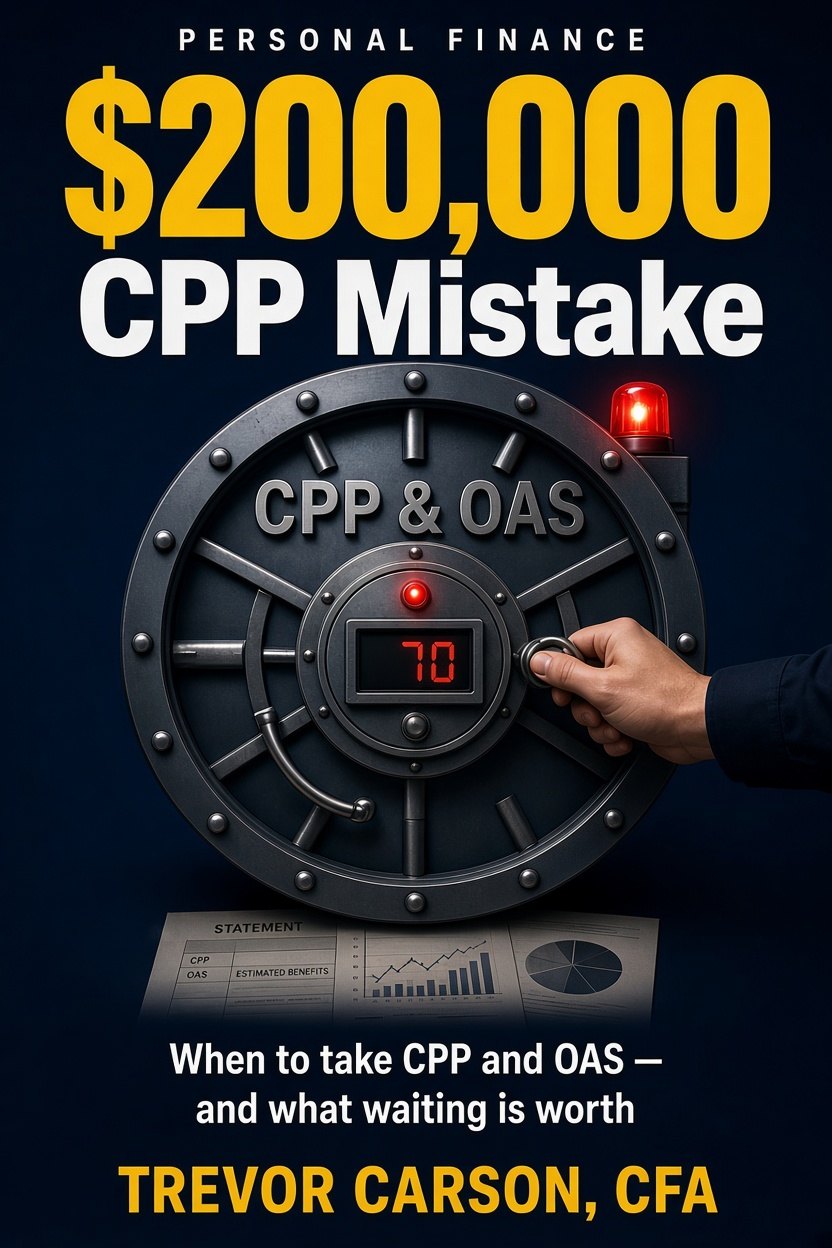
The decision tree gives you an answer. The book gives you the reasoning — why breakeven is the wrong question, how the survivor's pension is actually calculated, what the recovery tax does to a deferral, and the cases where taking benefits at sixty is genuinely correct.

Nine chapters, written in plain language by a CFA charterholder, ending in a one-page worksheet you can act on.

Get the Book on Amazon →
Kindle & paperback · Amazon.ca · read more first
The $200,000 CPP Mistake Most Canadians Make cover
Keep Going

Put a number on it

The tree tells you which direction to go. These tell you what it's worth, and what happens on either side of the decision.

Free Tool
“What is deferral actually worth to me?”

CPP & OAS Timing Calculator

Runs your own figures and shows which start age wins at every lifespan from 66 to 100 — plus breakeven ages, what deferral costs to bridge, and how it compares to buying an indexed annuity.

Run Your Numbers →
Book One
“What do I live on while I wait?”

The $100,000 RRSP & RRIF Mistake

Deferring creates a stretch of deliberately low income, and what you draw from your RRSP during those years is where most of the money is. Withdrawal sequencing, the meltdown window, and LIRA unlocking.

Read More →
Book Three
“What happens to what's left?”

The $150,000 Terminal Tax Bomb

The balance you don't spend lands on a final return, often at the top marginal rate. Beneficiary design, the second-death projection, donation credits, and second-to-die insurance.

Read More →