The Canadian Retirement Tax Series 1 · Drawdown sequencing· 2 · CPP & OAS timing· 3 · Tax at death

The $200,000 CPP Mistake Most Canadians Make

When to start CPP and OAS — and why "take it early" is the most expensive advice you'll ever get for free. Past a short cancellation window, this decision is permanent. This book walks you through it, in plain language, with your own numbers.

New — out now · Kindle & paperback · Written for Canadians 55–70 facing the decision
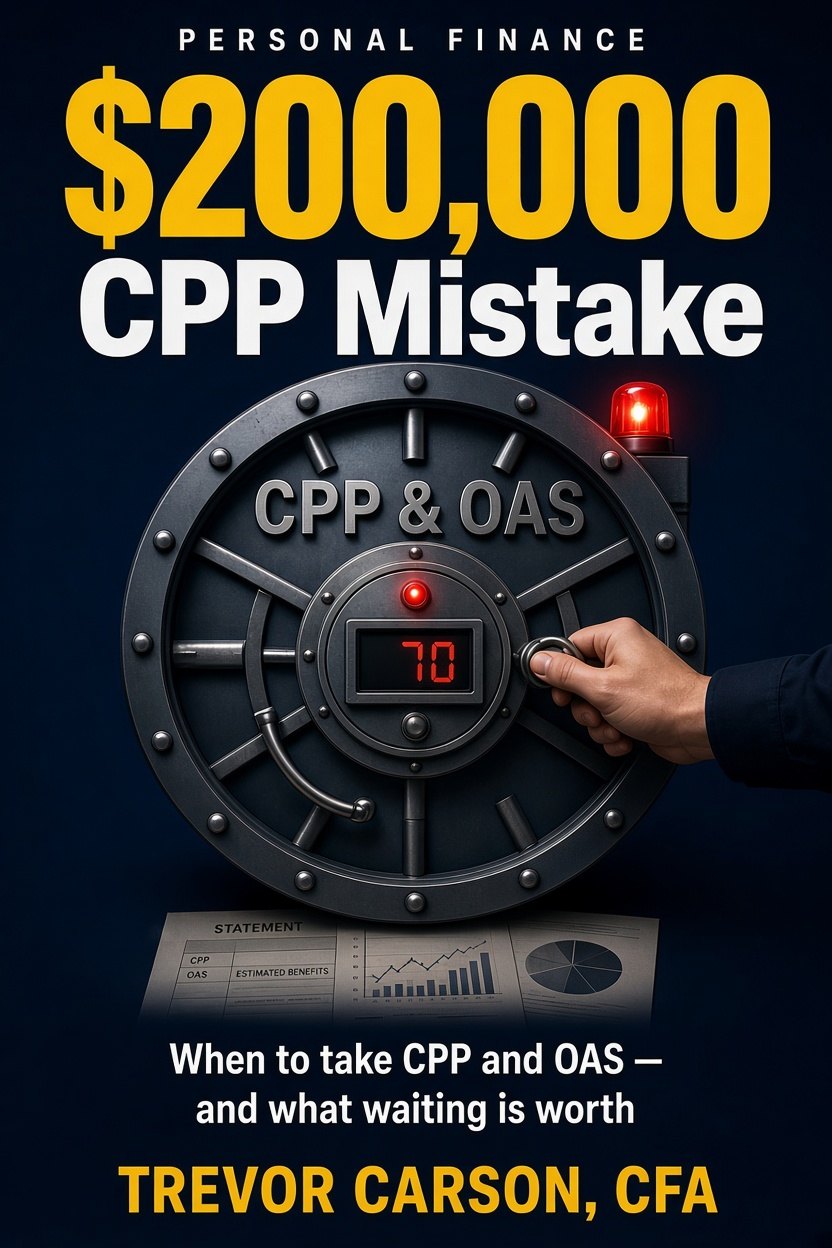
Book cover: The $200,000 CPP Mistake Most Canadians Make by Trevor Carson, CFA
Updated for the 2026 tax year A decision you make once, permanently Written by a CFA charterholder
The Problem

The Most Expensive Free Advice in Canada

"Take it early — you might not live long enough to break even" is the most common thing Canadians hear about CPP, and it is folk wisdom rather than analysis. Three things go wrong before the decision is even made:

01 — The Wrong Question

Mortality Is Not the Risk

CPP is not an investment; it is insurance against living a long time. Dying at seventy-two is a personal tragedy and a financial non-event — your money outlasted you. Running short at eighty-eight, with no capacity to fix it, is the catastrophe worth insuring against.

02 — The Wrong Number

The Maximum Is a Fiction for Most

Almost everyone runs the decision on the headline maximum, and almost nobody receives it. Your actual entitlement comes from your contribution record, the 17% general dropout, and provisions most people never claim — and the decision looks different at $1,100 a month than at $1,507.

03 — The Wrong Pairing

OAS Is a Separate Decision

CPP and OAS get decided together as though they were one choice. They aren't. CPP timing is driven by longevity; OAS timing is driven by the recovery tax and where your income sits at seventy-five. The right answer is frequently a different age for each.

The mortality argument, restated honestly, sounds like this: I would like to reduce my protection against living a long time, because I might not live a long time.
— Chapter 1, The Default That Costs $200,000
Free Tool — No Sign-Up

See Which Start Age Wins — At Every Lifespan

Most CPP calculators give you one answer built on one assumed lifespan. The CPP & OAS Timing Calculator shows which start age comes out ahead at every possible age at death, from sixty-six to a hundred — because that, and not a breakeven table, is the bet you're actually being asked to make.

It's the same math the book is built on. Run it before you buy — if deferral isn't right for your situation, it will tell you so in about two minutes.

Try the Free Calculator →
What it shows you
Your CPP start age60–70
Your OAS start age65–70
Winning age at every lifespanone picture
Breakeven ages by real returnfull table
What deferral pays vs. an annuity% of capital
No email. No sign-up. Instant results.
What You'll Learn

What You'll Be Able to Do After Reading

No products, no sales pitch, and no assumption that deferral is automatically right. The book argues hard for waiting because that's the correct answer for most of its readers — and it tells you plainly if you're one of the people for whom it isn't.

1Foundation

Find Your Real CPP Entitlement

How the pension is actually calculated, how to read your Statement of Contributions, and which dropout and credit-splitting provisions apply to you — so the decision runs on your number instead of the maximum.

2Core Math

Work the Adjustment and Its Breakeven

−0.6% a month before sixty-five, +0.7% a month after. What deferral costs in forgone payments, what it buys in indexed lifetime income, and why the breakeven table everyone quotes is answering the wrong question.

3Separate Decision

Time OAS on Its Own Terms

Partial OAS and the residency formula, deferral to seventy for a 36% increase, the 10% uplift at seventy-five, and how the recovery tax at $95,323 of net income should — and shouldn't — change your start date.

4Your Answer

Run the Four-Factor Decision Tree

Longevity, bridge capacity, GIS exposure, and marital status. Four inputs produce your answer, including the cases — genuine health limitations, immediate income need, GIS range — where taking benefits at sixty is correct.

5Couples

Do the Survivor Arithmetic Properly

The survivor's pension is built on the deceased's age-65 amount, so your deferral does not transfer to your spouse. The combined-benefit ceiling, the income cliff at the first death, and whose deferral actually protects whom.

6One Afternoon

Write Your Decision on One Page

The worksheet, the application timing, the twelve-month cancellation window if you've already started, and the traps in the Service Canada paperwork that quietly change your start date.

Chapter 7 — One Strategy, Two Names

Deferring CPP creates a stretch of deliberately low income. What you draw from your RRSP during those years, before RRIF minimums force the issue, is where most of the money actually is. That's the whole subject of the first book in the series.

See Book One →
Inside the Book

Nine Chapters. One Decision, Made Properly.

Read in order — each chapter builds on a figure you wrote down in the one before. Five chapters end by asking you to write something down, and those figures assemble into the worksheet in Chapter 9.

That worksheet is the actual deliverable. Plus appendices: adjustment factor tables, breakeven tables, RRIF minimums, survival probabilities, and a glossary.

CH 1
The Default That Costs $200,000
Why "take it early" is folk wisdom, not analysis
CH 2
Your Number, Not the Maximum
How CPP is actually calculated, and finding your real entitlement
CH 3
The Adjustment Math
Breakeven ages, what deferral costs, and what it buys
CH 4
OAS Is a Different Decision
The clawback, partial OAS, and why this isn't the same choice
CH 5
The Four Factors That Actually Decide It
The decision tree that produces your answer
CH 6
The Couples Chapter
Survivor benefits, the combined-benefit ceiling, the widow's income cliff
CH 7
One Strategy, Two Names
How CPP deferral and registered drawdown are the same plan
CH 8
When the General Case Doesn't Fit
Working past sixty, divorce, immigration, Quebec, emigration
CH 9
Your Decision, On One Page
The worksheet, the application, and the traps in the paperwork

The Numbers Behind the Decision

The dollar amounts in CPP and OAS are indexed and change every year. The percentages are legislated and stable — and every argument in the book rests on those, not on the dollar figures.

$200K+
Lifetime difference between the default start age and the right one, for a household that lives a normal length of time
42%
Permanent increase in CPP from waiting from sixty-five to seventy — indexed, guaranteed, and impossible to outlive
36%
Permanent increase in OAS from the same wait, before the further 10% uplift that applies at seventy-five
$11,000
Additional indexed annual income, in today's dollars, that one couple's deferral bought them for life
The Decision Map

The Ten Ways This Decision Goes Wrong

None of these look like errors at the time. Most of them are made in a single afternoon, on the basis of something a neighbour said, and cannot be undone twelve months later.

×Running the decision on the CPP maximum rather than your own entitlement
×Treating CPP as an investment to break even on rather than insurance to buy
×Comparing indexed CPP against a nominal portfolio return
×Starting CPP and OAS on the same date because the forms arrived together
×Deferring OAS without checking where income lands at seventy-five
×Deferring anything at all while in Guaranteed Income Supplement range
×Assuming your deferral increases your spouse's survivor pension
×Ignoring the combined-benefit ceiling when planning as a couple
×Taking CPP early while leaving a large RRSP untouched
×Missing the twelve-month cancellation window after starting by mistake
The Series

Three Decisions, Three Books

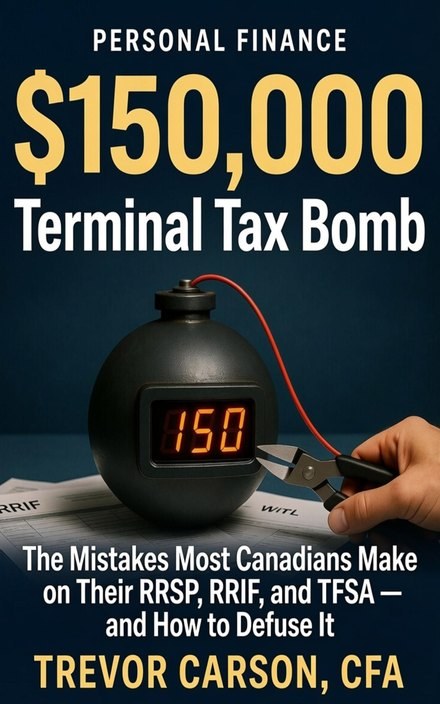
Each book answers one question and stands on its own. Together they cover the order you draw your accounts down in, the date you turn your government pensions on, and what lands on the final return.

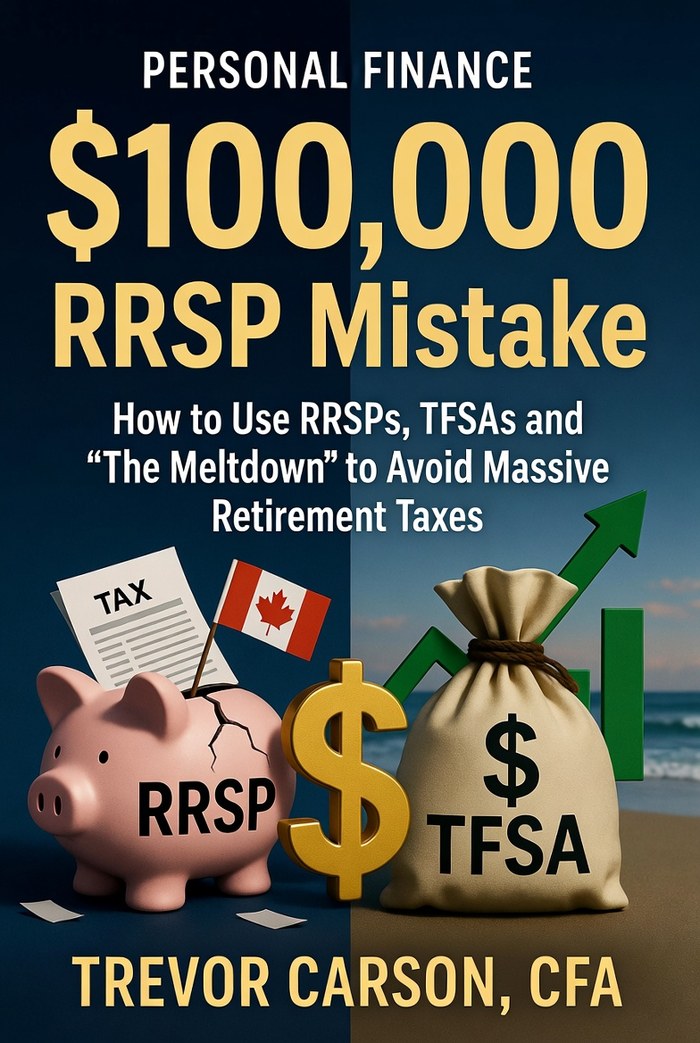
The $100,000 RRSP & RRIF Mistake cover
Available Now

The $100,000 RRSP & RRIF Mistake

Withdrawal sequencing, the meltdown window, asset location, LIRA unlocking, and keeping RRIF minimums clear of the OAS clawback — the drawdown decisions between 55 and 71.

Buy on Amazon.ca →
Kindle · Paperback · Audible · Read more
The $150,000 Terminal Tax Bomb cover
Available Now

The $150,000 Terminal Tax Bomb

What the spousal rollover defers rather than erases — beneficiary design, the second-death projection, donation credits, and second-to-die insurance.

Buy on Amazon.ca →
Kindle · Paperback · Read more
The $200,000 CPP Mistake cover
New — Out Now

The $200,000 CPP Mistake

The adjustment math, why breakeven is the wrong question, OAS as a separate decision, survivor benefits and the combined-benefit ceiling — the start-date decision between 60 and 70.

Buy on Amazon.ca →
Kindle · Paperback · You're on this book's page
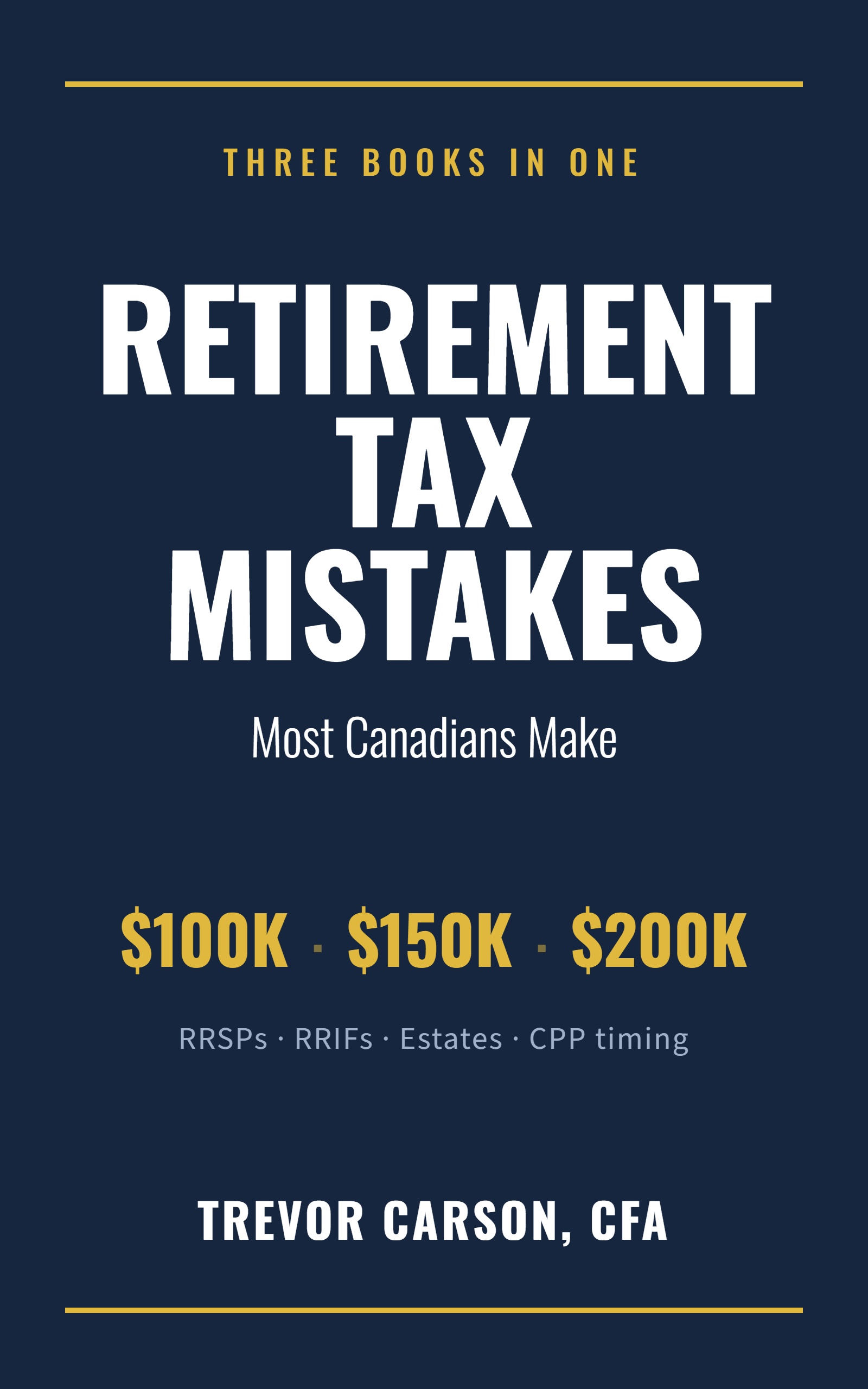
Retirement Tax Mistakes Most Canadians Make — collected edition cover
Collected Edition

Retirement Tax Mistakes Most Canadians Make

All three books in a single 278-page volume — drawdown sequencing, CPP and OAS timing, and tax at death. Three books for the price of two.

Get All Three — $34.99 →
Kindle · Paperback
Trevor Carson, CFA
About the Author

Trevor Carson, CFA

Trevor is a CFA charterholder based in Calgary, Alberta. He wrote the first two books in this series — and built the free calculators that accompany them — because the drawdown side of retirement planning is where Canadian households lose the most money and get the least plain-language guidance.

This third book covers the decision with the largest single dollar consequence and the least analysis behind it. Discount rates, longevity risk, and the price of transferring risk to someone else are the substance of the CFA curriculum — and they are exactly what the CPP timing decision turns on.

He isn't selling investment products, insurance, or advisory services. The books, the math, and the calculators are the whole offer.

FAQ

Frequently Asked Questions

Straight answers to what Canadians ask most about when to start CPP and OAS.

Should I take CPP at 60 or wait until 70?
For most people with other assets to live on, waiting is the better decision — but not because of a breakeven date. CPP is inflation-indexed lifetime income backed by the federal government, which makes deferral a purchase of longevity insurance rather than an investment bet. The situations where starting at sixty is genuinely correct are a materially shortened life expectancy, an immediate income need you can't meet another way, and Guaranteed Income Supplement eligibility — where the conventional advice actually inverts.
How much does CPP increase if I delay it?
CPP is reduced by 0.6% for every month you start before sixty-five, to a maximum reduction of 36% at sixty, and increased by 0.7% for every month you start after, to a maximum increase of 42% at seventy. Those percentages are legislated and haven't moved in years. In Quebec, QPP deferral now runs to seventy-two for a maximum increase of 58.8%.
What is the CPP breakeven age?
Roughly the early eighties for a sixty-versus-sixty-five comparison at a modest real return, and later for deferral to seventy. But breakeven is the wrong frame: it compares a guaranteed indexed income against a portfolio return you'd have to earn after inflation and after tax, every year, without fail, while carrying market risk to match something that carries none. Comparing indexed CPP against a nominal return is the single most common error in amateur analysis, and it always favours taking benefits early. The free calculator runs the comparison at several real returns.
How much CPP will I actually receive?
Far less than the maximum, in most cases. The 2026 maximum at sixty-five is $1,507.65 a month, but it requires roughly forty years of contributions at or above the Yearly Maximum Pensionable Earnings. Your own figure comes from your Statement of Contributions in My Service Canada Account — and if you're retiring before sixty-five, request a customised estimate, because the standard one assumes you keep contributing until then.
Can I defer OAS, and should I?
OAS can be deferred from sixty-five to seventy at 0.6% per month, a maximum increase of 36%, and the 10% uplift that applies at seventy-five is then calculated on the larger amount. There is no early-start option. Unlike CPP, this decision is driven mainly by where your taxable income sits in your seventies rather than by longevity — deferring into a higher-income decade can push more of the benefit into the recovery tax.
What is the OAS clawback threshold?
The OAS recovery tax begins at $95,323 of net income for the 2026 income year and takes back fifteen cents of OAS for every dollar above it, eliminating the benefit entirely at the upper end. Large RRIF minimums stacked on top of CPP and OAS are the most common way households cross the threshold without intending to.
Does deferring my CPP increase my spouse's survivor pension?
No — and this is the most consequential misunderstanding in the couples chapter. The survivor's pension is calculated on the deceased contributor's age-sixty-five entitlement, not on the amount they were actually receiving. Deferring your own CPP does not increase what your spouse eventually gets. A combined-benefit ceiling also caps their own pension plus the survivor's pension at the single-person maximum, which for many survivors means receiving little or nothing. The deferral that protects a survivor is their own.
I might qualify for the Guaranteed Income Supplement. Does this book apply?
Largely not, and following the general advice could cost you money. GIS can't be received without OAS, so deferring OAS also defers GIS, and GIS is then reduced steeply by other income including CPP — so extra CPP from deferral doesn't arrive intact. The book says so plainly and sends readers in GIS range to get advice from someone who will model the offset specifically. The calculator flags it too.
I've already started CPP. Is it too late?
Not necessarily. There is a twelve-month cancellation window after payments begin, subject to repaying what you've received, and Chapter 9 covers the mechanics. More importantly, your OAS decision is probably still entirely open, and the drawdown strategy the book describes works regardless of when your CPP started.
Do I need to read the first two books first?
No. Every concept is explained from first principles. Chapter 7 does connect directly to the drawdown sequencing in The $100,000 RRSP & RRIF Mistake — deferring CPP and melting down an RRSP are the same plan described two ways — but the CPP decision stands entirely on its own.
Is this book financial or tax advice?
No. The book and the calculator are educational material illustrating concepts with approximate figures. They are not a substitute for advice from a qualified financial planner, tax advisor, or someone who can model your specific situation. Because the start date is, past the cancellation window, permanent and irreversible, consider consulting a professional before acting.
This Is One of the Few Retirement Decisions You Cannot Take Back

Asset mixes can be rebalanced. Withdrawal plans can be revised every January. A CPP start date, past a twelve-month window, is permanent — and it sets an indexed income floor for the rest of your life and, in part, your spouse's.

It deserves more than an afternoon and a neighbour's opinion.

The $200,000 CPP Mistake cover
Get the Book
Kindle & paperback · Amazon.ca
Buy on Amazon →
For informational purposes · Consult a qualified advisor for your specific situation

Already read it? Leaving a short review on Amazon does more for a self-published book than anything else — and takes about ninety seconds.

Get in Touch

Questions About the Book?

A question about a strategy, a bulk order, a media inquiry, or an early-review copy — send a message and Trevor will get back to you personally.

Message sent — Trevor will be in touch within 1–2 business days.
Something went wrong. Please try again in a moment.
Your information is never shared or sold.